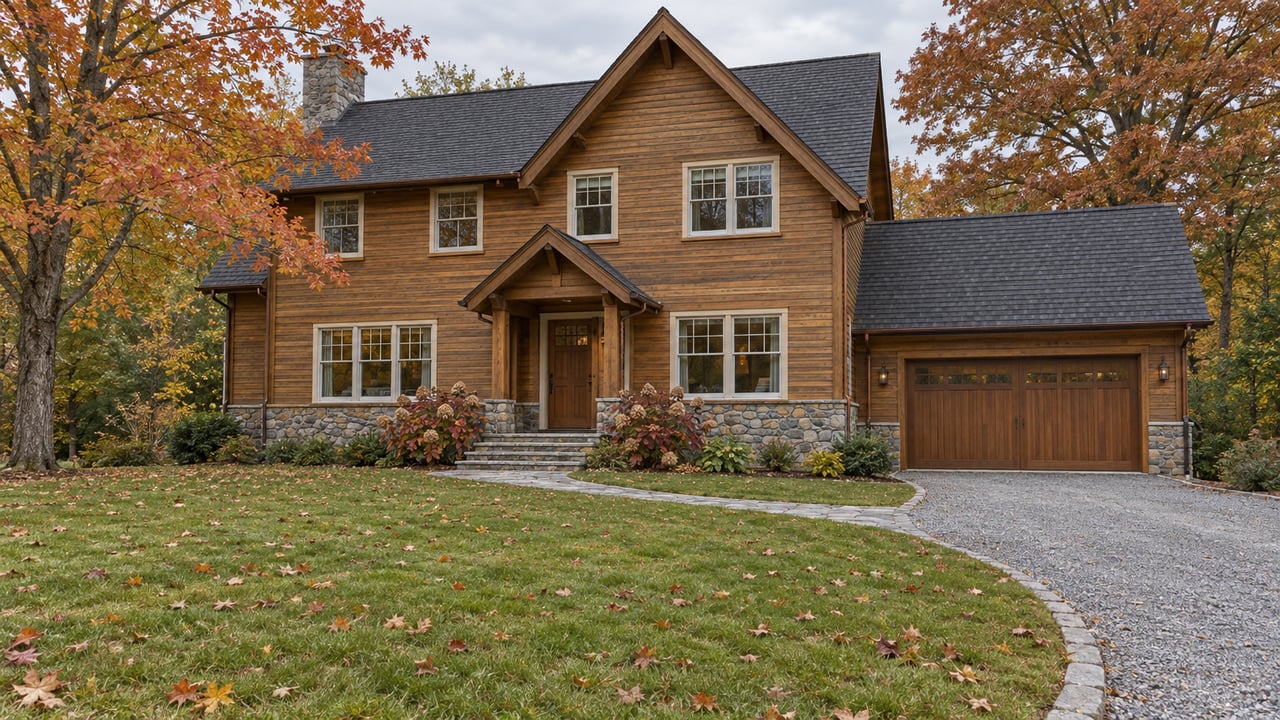
Suppose you buy a four-bedroom colonial a short drive from the UConn campus in Storrs and plan to rent it by the room. How many unrelated tenants can legally live there? In most cases the answer is three. Depending on when the property first became a rental, it may be four. Five tenants is never an option, and an empty fourth bedroom changes the numbers more than most buyers expect.
That one limit helps explain where the town's rental growth went. UConn's Storrs enrollment hit a record 20,834 in fall 2025, a 9% increase since 2016, according to Mansfield's 2026 draft housing chapter. From 2015 to 2025, registered rentals in Mansfield more than doubled, while only 83 more single-family homes joined the rental rolls. The demand was real. The town wrote its rules so that houses would be the lowest-paying place to meet it.
A Rule Written to Make Houses Pay Less
Mansfield's zoning definition of "family" generally counts up to three unrelated adults as a household. It presumes that groups of more than three unrelated people, including college students, do not qualify as a functional family. Other categories and exceptions in the published definition still apply. Until 2010 the limit was four. The town's housing chapter states the reason for the change directly:
"To discourage the conversion of single-family homes into high-occupancy, investor-owned rentals, the Planning and Zoning Commission reduced the maximum number of unrelated individuals considered a 'family' from four to three in 2010. This change was intended to limit the economic incentive to rent single-family homes by the bedroom, particularly in established neighborhoods."
Two more layers sit on top of the occupancy cap. Mansfield has required landlords to register since 2007. In fall 2014 the Town Council extended that requirement townwide and added biennial inspections for every rental unit. Owner-occupied units are exempt. For an investor, those three rules together set a ceiling on rent per house and add a fixed compliance routine. For an owner-occupant, registration and inspection don't apply to the home you live in, though the family definition still governs how a dwelling is occupied.
What the Town's Own Count Shows
If the cap works the way the town intended, rental growth should collect in buildings designed for many tenants and stay thin in single-family homes. Mansfield's figures for 2015 to 2025 show exactly that.
| Measure | 2015 | 2025 |
|---|---|---|
| Single-family homes | 3,419 | 3,538 |
| Apartments | 1,904 | 2,912 |
| Registered rentals, all types | 1,386 | 3,082 |
| Single-family homes registered as rentals | 370 | 453 |
Registered rentals grew 122% over the decade. Single-family rentals grew by 83 homes. Apartments added about eight units for every new single-family home. In 2015, single-family homes made up roughly 27% of registered rentals. By 2025 they were under 15%. The town's summary is that conversions "have not driven overall housing growth" and that new apartments, mostly in Northwest Mansfield, Downtown Storrs, and southern Mansfield, did most of the work.
Where the Beds Went Instead
A capped house holds three unrelated tenants, or four if its rental history allows. A building designed for student leasing holds hundreds, and recent projects show the size of that gap.
- The Standard at Four Corners, developed by Landmark Properties with Manulife Investment Management, opened for the 2025–26 academic year with 392 units for 890 residents, CT Insider reported. UConn said it helped ease demand.
- The Mark, on North Eagleville Road, is next. The town's housing chapter describes phase one as 216 units with 593 bedrooms and 6,932 square feet of commercial space, under construction. The total size is reported differently in different places. Landmark's March 2025 announcement cited 738 beds at 134 North Eagleville Road, while CT Insider described roughly 1,350 beds across two parcels, with the north-side site built first. No confirmed opening date has been published.
Density figures from a recent hearing show how far apart these formats are. An attorney for one applicant told the Planning and Zoning Commission that the Celeron Square apartments run about 34 occupants per acre and the Standard close to 59, according to CT Insider's Journal Inquirer coverage. A single-family lot with three permitted unrelated occupants can't compete with that, which was the purpose of the 2010 change.
Demand Keeps Climbing
The apartment pipeline is running against a moving target. For fall 2025, UConn ended its on-campus housing guarantee for rising sophomores, juniors, and seniors. First-year students and eligible transfers kept theirs. The Daily Campus reported a waitlist of 1,270 students on April 2 and about 1,500 by May 6. UConn said the waitlist was gone by the first days of the semester. That fall, Storrs housing ran at full capacity with nearly 13,400 students housed. UConn leased units at The Oaks on the Square and converted some lounges into living space, in addition to the 657-bed Connecticut Hall that opened in August 2024.
This fall's enrollment is higher. On August 26, 2026, UConn Today estimated more than 21,000 undergraduates at Storrs, including about 4,500 incoming first-year students. Final figures are set after the tenth day of the semester. The town reports that roughly 70% of full-time undergraduates live on campus, a share that has held steady for 20 years. The other 30% either live off campus or commute.
The Approval Pipeline Just Got Narrower
The occupancy cap only keeps pressure off single-family homes if large projects keep getting approved. On October 5, 2026, the Planning and Zoning Commission voted 8-1 to reject Junction 183. That was SR Real Estate Partners' plan to replace the 16 buildings at the Carriage House Apartments, off Hunting Lodge Road, with 35 buildings and 192 apartments in two-, three-, and four-bedroom layouts. The commission found the plan inconsistent with the town's 2015 and 2026 Plans of Conservation and Development. Several members who voted no mentioned water, and some also raised density and housing opportunity, CT Insider reported. Earlier in the year, CT Insider reported that the developer said the project would not be limited to student tenants. It had also proposed renovating 26 units at Maplewood Apartments toward the town's 15% affordable housing requirement.
That proposal is off the table for now. The off-campus share of a growing enrollment now depends more on projects already approved, such as The Mark, and on the existing apartment stock.
Enforcement Is the Part That's Still Changing
How the rules are enforced matters as much as how they're written. According to Inside Investigator, a Mansfield landlord sued over the town's practice of counting cars in driveways to infer overnight guests as tenants under occupancy limits of three or four unrelated people, depending on when the property became a rental. On June 22, 2026, the Town Council authorized a $12,500 settlement that includes changes to enforcement policy. As of the outlet's July report, the specific changes had not been disclosed and still needed judicial approval. Nothing reviewed shows the town changing the family definition itself. The cap is unchanged. The way it's enforced may change.
How the Same House Looks to Different Buyers
These rules apply within a county market that is still tight. In August 2026, SmartMLS recorded a Tolland County single-family median sale price of $460,000, up 15% from August 2025. Homes sold in a median of 22 days for 104.7% of list price, with 2.1 months of supply. Those are countywide figures. Mansfield-only numbers from the same period weren't available.
Here's what that means for each type of buyer:
- Owner-occupants are buying in a town where single-family rentals have barely grown in ten years and owner-occupied homes are exempt from rental registration and inspection. Mansfield's mayor told Inside Investigator that the overcrowding rules were drafted partly because per-bed rents had let landlords outbid families trying to buy houses. That is her account of the rule's origin, not a measured price effect.
- Investors planning a by-the-room rental should underwrite for three tenants unless the property's history supports four. They should also budget for registration, a biennial inspection, and enforcement procedures that are still being revised.
- Investors comparing formats should note that the town's own policy points rental growth toward multifamily. The Junction 183 vote shows that even large apartment projects still have to clear the Plan of Conservation and Development.
A Few Common Questions
Does the three-person limit apply if I live in the house? The family definition covers how a dwelling is occupied. Mansfield's rental registration and inspection rules, though, exempt owner-occupied units. Confirm how both apply to a specific property with the town before you buy.
How do I know whether a house qualifies for four unrelated occupants? According to Inside Investigator, the limit depends on when the property became a rental. The town's housing and zoning offices hold that history, and it's worth requesting it during due diligence.
Is The Mark open? Its first phase was described as under construction in the town's 2026 draft housing chapter. No opening date has been published.
Jennie Kesselman and the Marquee Team at Real Estate Elevated advise buyers and investors on how Mansfield's occupancy limits, rental registration, and approval pipeline change what a property near Storrs is actually worth. If you're comparing an owner-occupied home with an income property in Tolland County, let's connect and work through the numbers on a specific address.
This article is general information, not legal, tax or financial advice. Consult a qualified professional about your situation.